AI workflow automation services: what agencies build, with real examples
By Supriya · · 12 min read
Buyers searching for AI workflow automation services want to know what they actually get. AI Automation DB lists 792 approved agencies. Of those, 535 offer workflow automation (24 Nov 2026). This post explains what those agencies build and how the workflows run. It covers costs too. It uses eight case studies from agency websites.
Sources and method: Case studies come from agency websites, opened on 24 November 2026. Directory counts are approved listings on that date. Agencies self-report their services, so counts show what is listed, not the whole market.
What AI workflow automation services include
AI workflow automation: a workflow that moves data between apps. AI reads, sorts or writes along the way.
A classic workflow follows fixed rules. If a form arrives, create a CRM record. An AI workflow adds steps that handle messy input. It can read a free-text email. It can run data extraction on a PDF. It can draft a reply. Rules route the data. AI handles the parts rules cannot. That is the gap between workflow automation and AI workflow automation.
An engagement usually covers five things. Buyers use several labels for the provider. Common labels include workflow automation consulting and AI workflow consultant. Another is AI process automation consultant. In practice a small agency or solo consultant often does all five.
- Audit: map the current process and rank the bottlenecks.
- Design: decide which steps use rules, which use AI and which need a person.
- Build: run the integration work on a platform such as n8n, Zapier or Make.
- Controls: add review steps, error alerts and retry logic.
- Run: monitor, fix and extend the workflow after launch.
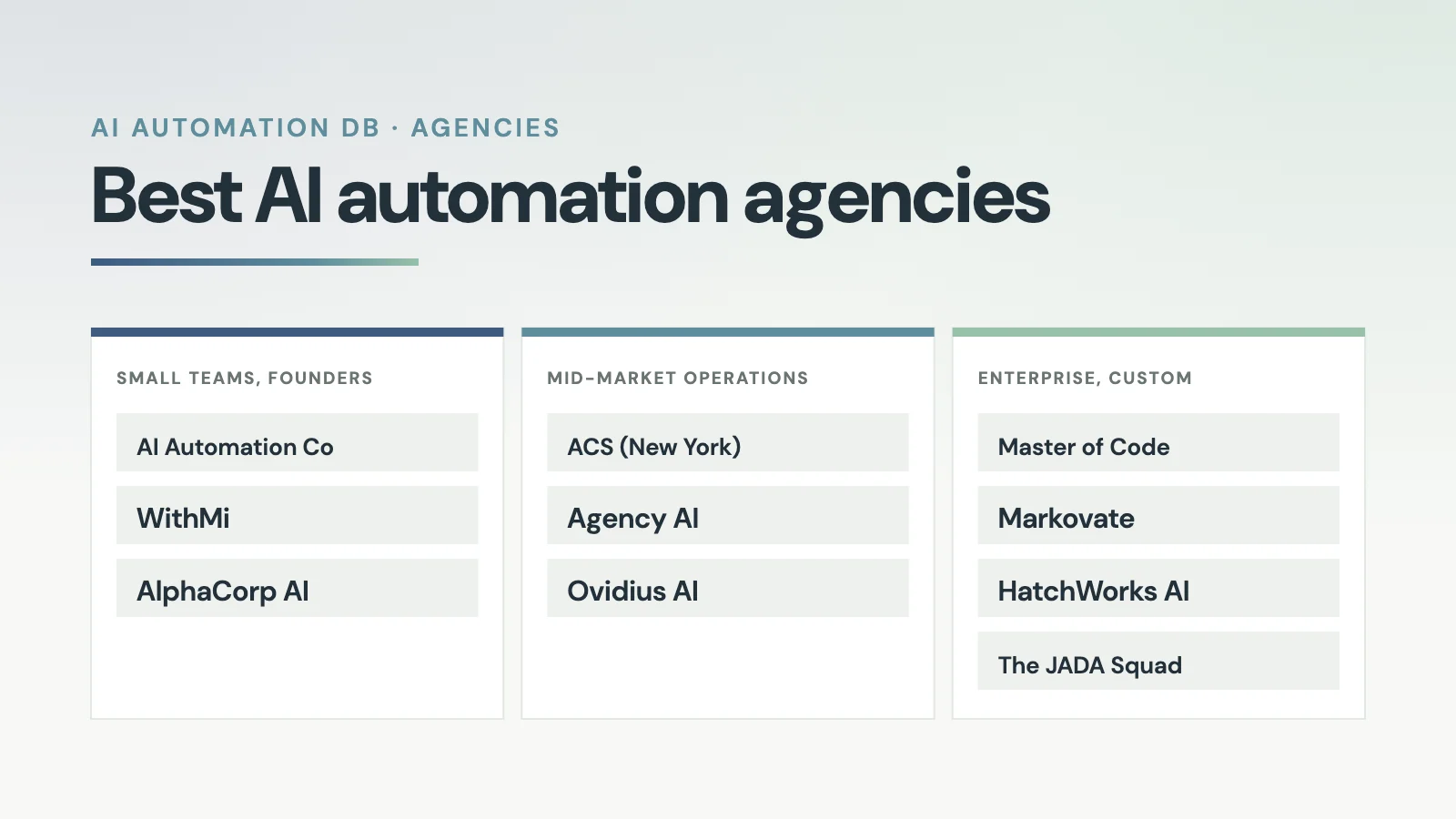
This post explains the service. To compare providers, browse the workflow automation agency hub. For a ranked-by-demand shortlist, see our best AI automation agencies comparison.
How an AI workflow runs, step by step
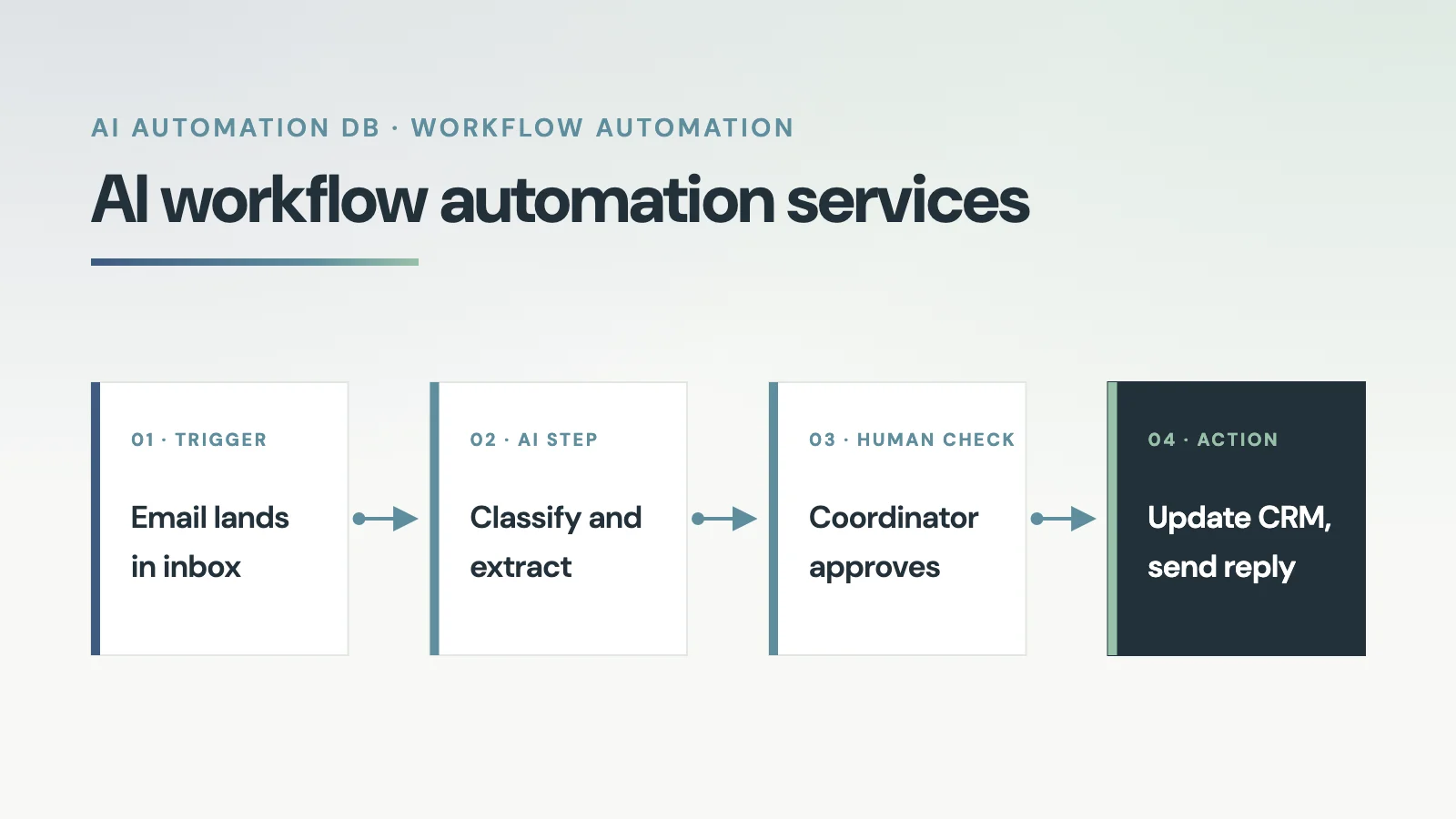
Every workflow has the same four parts. Knowing them helps you read a proposal.
Triggers: webhook, schedule or inbox
A trigger starts each run. Three kinds cover most builds.
- Webhook: an app pushes data when an event happens. n8n's Webhook node makes a workflow an endpoint. Other services call it.
- Schedule: the workflow polls on a timer. n8n's Schedule Trigger works like a cron job.
- Inbox or file: a new email, form or document starts the run.
A webhook fires at once. Polling suits systems with no push option, such as supplier portals.
AI steps: classify, extract, generate, act
The AI step is one of four jobs.
- Classification: sort an input into a category, such as invoice, complaint or lead.
- Extraction: pull structured fields from text, such as owners and deadlines from a transcript.
- Generation: write a draft reply, report or summary.
- Agents: an AI agent chooses which tool to call next, within set limits.
Most business workflows need only the first three. An agent adds flexibility and risk. Use one when the path cannot be fixed in advance.
Human-in-the-loop: where a person decides
A review step pauses the run until a person acts. n8n's human-in-the-loop for tools makes an agent wait. A person approves or denies its action first. Several case studies below use this pattern. The AI drafts and a person sends.
Error handling: what happens when a step fails
Workflows fail. A portal changes its layout. An API times out. A model returns an unexpected value. Good builds plan for it. n8n supports an error workflow. It alerts your team when a run fails. Automation Consulting Services lists error monitoring and retry logic in its simple-workflow tier. Ask any agency how it logs failures and who gets the alert.
The AI-step placement test
Not every step deserves AI. This four-question test sorts each step into rules, AI with review or AI alone. Run it on each step, not on the whole workflow. To pick the first workflow, use the guide chapter on what to automate first.
| Question | If yes | If no |
|---|---|---|
| 1. Is the input unstructured (free text, PDF, voice)? | AI step is a candidate | Use plain rules |
| 2. Can a rule or a person check the output quickly? | AI step is safe to try | Keep a person on the step |
| 3. Does a wrong output cost real money or trust? | Add an approval step | AI can run alone |
| 4. Does the step run often enough to repay the build? | Build it | Leave it manual |
Score the result. Two yeses on questions 1 and 2 mean an AI step with a log. A yes on question 3 adds a person. A no on question 4 stops the build. The case studies below all pass this test. Flowtivity's inbox agent is a clear case. The input is free text. A wrong reply is costly, so a person approves each draft.
AI workflow automation examples: eight real builds
These come from case studies on the agencies' own websites. Each agency is listed on AI Automation DB. Results are the agencies' own figures, not independent audits.
1. Meeting notes to action items
Automation Consulting Services built this for a healthcare SaaS CEO. The CEO held 20+ external meetings weekly. See the case study.
- Trigger: a Fireflies transcript of each call.
- AI step: OpenAI extracts action items, owners and deadlines.
- Human step: the CEO approves via a daily Gmail digest.
- Action: approved items route to Slack or Notion.
- Result: the agency reports 6 to 8 hours saved weekly. It went live in four weeks.
2. Quote generation from CRM deals
The same agency built this for a $10M supplement manufacturer. See the case study.
- Trigger: a sales rep enters SKUs and quantities on a HubSpot deal.
- Logic: pricing rules in Google Sheets, wired in with Zapier.
- Action: PandaDoc generates the quote. Margin rules block under-priced quotes.
- Result: 80% faster quotes, live in three weeks.
This one has no AI step. It shows that the right answer is sometimes plain rules.
3. Live lead times from supplier portals
Automation Consulting Services also built this for an $8M HVAC distributor. See the case study.
- Trigger: an hourly schedule.
- Logic: scrapers and API pulls read supplier portals. A script normalises SKUs.
- Action: a diff-based sync updates the website. Slack alerts fire on scraper failure.
- Result: 5,500+ SKUs refresh without manual work, live in five weeks.
4. An inbox agent that never sends
Flowtivity is a Gold Coast studio. It built an email agent for a Victorian allied health practice. See its case studies.
- Trigger: a new email in the coordinator's inbox.
- AI step: the agent works out what the sender needs.
- Generation: it leaves a threaded draft in the coordinator's writing voice.
- Human step: a person checks, edits and sends. Nothing goes out unreviewed.
- Result: about 1,750 emails processed and 930 drafts prepared since launch.
5. A tender monitor across 41 portals
Flowtivity built this for a Queensland government tender consultancy.
- Trigger: a daily schedule.
- Logic: the monitor logs in to 41 portals and removes duplicates.
- AI step: each tender is scored against the firm's bid profile.
- Human step: the director decides whether to bid.
- Result: one morning digest replaces 41 portals, with about 800 open tenders tracked.
6. Estimate review before it reaches the client
Flowtivity also built a pre-estimate review agent for a national renovation contractor.
- Input: an estimate built from a 30+ page PDF scope.
- AI step: the agent flags zero-quantity lines, margin leakage and typos.
- Human step: an estimator decides. Each correction adds a new check.
- Action: one step generates six locked client Excel formats.
- Result: 231 estimate lines become a client-ready workbook in one step.
7. Personalised outreach for conference campaigns
OstraconAI is a Helsinki agency. It built outreach for Gosta Labs, a specialty-care software company. See the case study.
- Setup: an ideal customer profile, warmed inboxes and verified addresses.
- Trigger: each oncology congress gets a targeted, enriched list.
- AI step: AI writes a first line that cites each doctor's own research.
- Result: 3,930 messages sent, 198 replies and 62 quality opportunities across three conferences.
8. Enterprise service desk deflection
Insurgence is a Melbourne firm for larger organisations. Its site describes an unnamed client with high-volume HR, finance and customer service enquiries.
- Trigger: an inbound enquiry.
- AI step: automation handles the repetitive requests.
- Delivery: six-week development cycles.
- Result: the agency reports 15 to 20% of inbound traffic automated.
The client is unnamed, so treat the figure with care.
What the directory shows
Of 792 approved agencies, 535 (68%) list workflow automation. That makes it the second most common service after AI agents, at 548. Among those 535, 358 also list AI agents. Also, 135 list CRM automation.
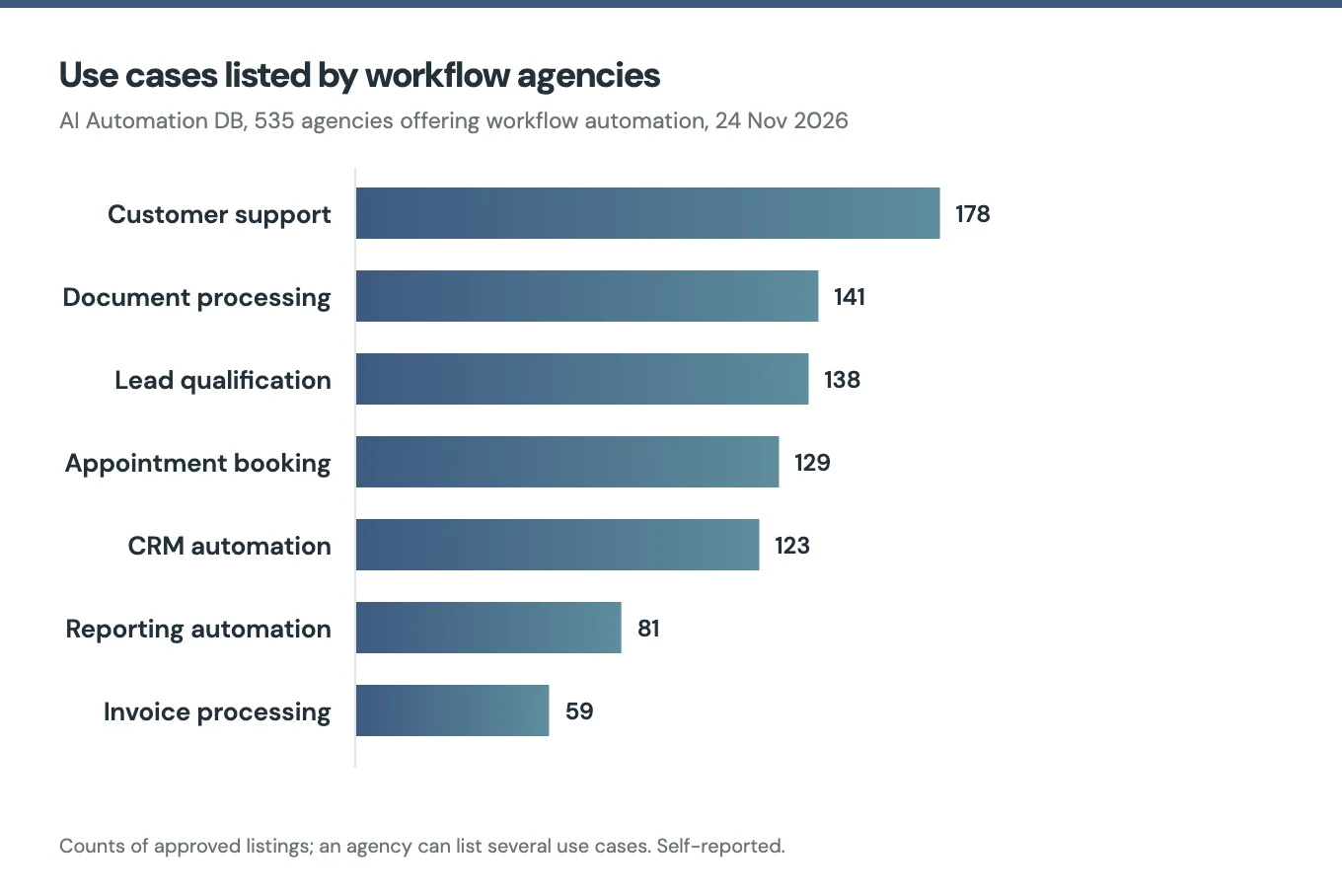
Customer support leads at 178 agencies. Document processing follows at 141. Lead qualification is third at 138. The pattern matches the case studies above. Buyers start where inputs are messy and volume is high.
Platform listings tell a similar story. 301 of the 535 agencies name at least one platform. Among them, 228 list n8n, 160 list Zapier and 150 list Make. The AI models they name are OpenAI (221 agencies) and Anthropic (203).
| Industry | Workflow agencies listing it |
|---|---|
| Healthcare | 193 |
| Professional services | 160 |
| Real estate | 158 |
| E-commerce | 144 |
| Finance | 136 |
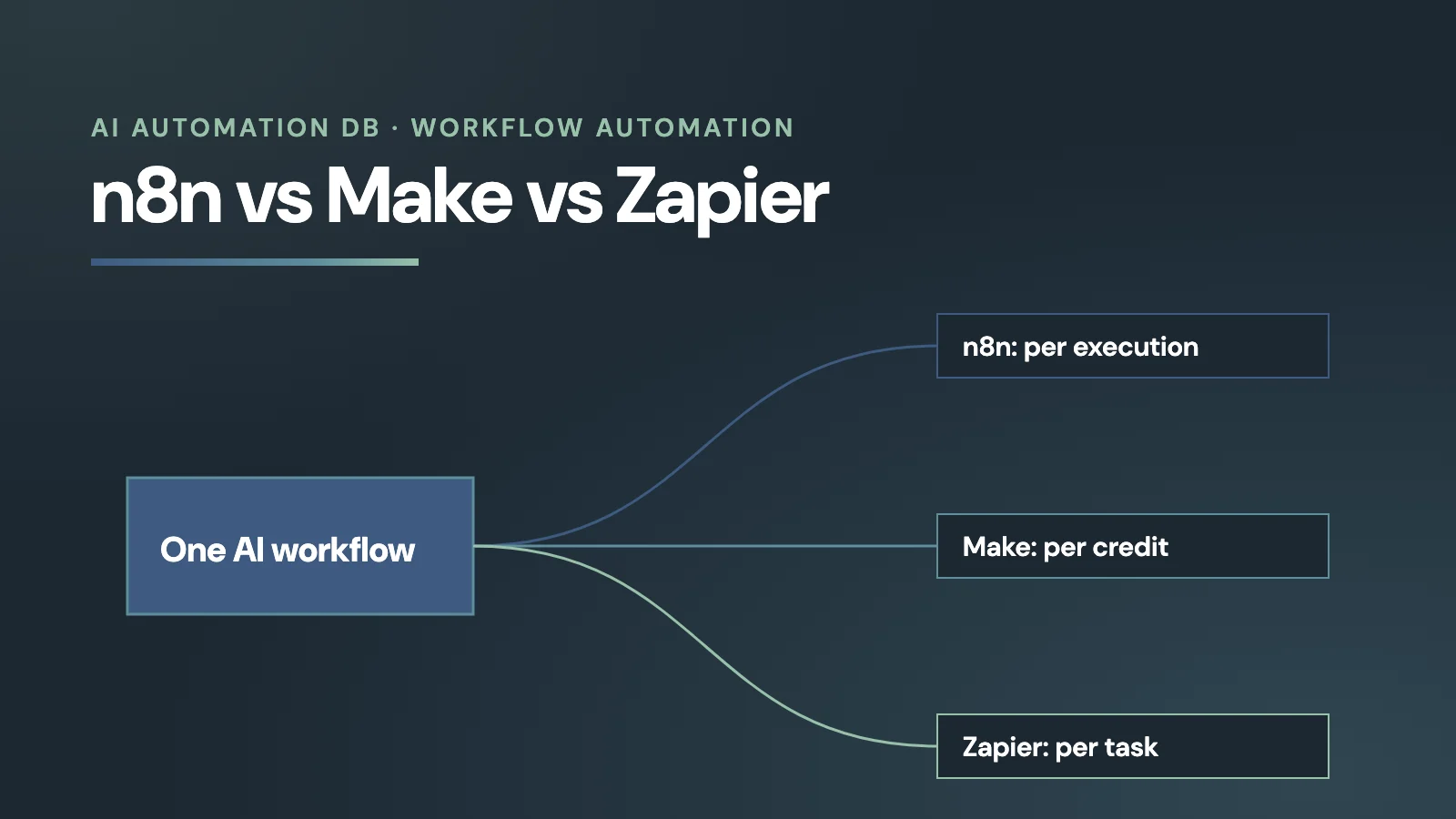
Method: counts of approved listings among the 535 workflow agencies, 24 Nov 2026. Industries are self-reported, and agencies list several. Browse healthcare agencies or the customer support use case to filter further. The n8n vs Make vs Zapier comparison covers how each platform bills.
What workflow automation services cost
Most agencies do not publish prices. Of the 535 workflow agencies, 288 list some pricing text on their profile. That text is self-reported and varies from hourly rates to retainers. Two agencies here publish clear figures.
Automation Consulting Services publishes fixed fees on its pricing page (as of November 2026).
| Tier | Price | Typical duration |
|---|---|---|
| Discovery audit | From $500 | 1 to 2 weeks |
| Simple workflow | $5,000 to $15,000 | 1 to 3 months |
| Mid-complexity build | $15,000 to $75,000 | 3 to 6 months |
| Retainers | $2,000, $5,000 or $10,000 per month | Month-to-month |
OstraconAI lists automation work from 4,500 EUR monthly on its site. Prices are as of November 2026. Its marketing and sales AI strategy work starts from 30,000 EUR.
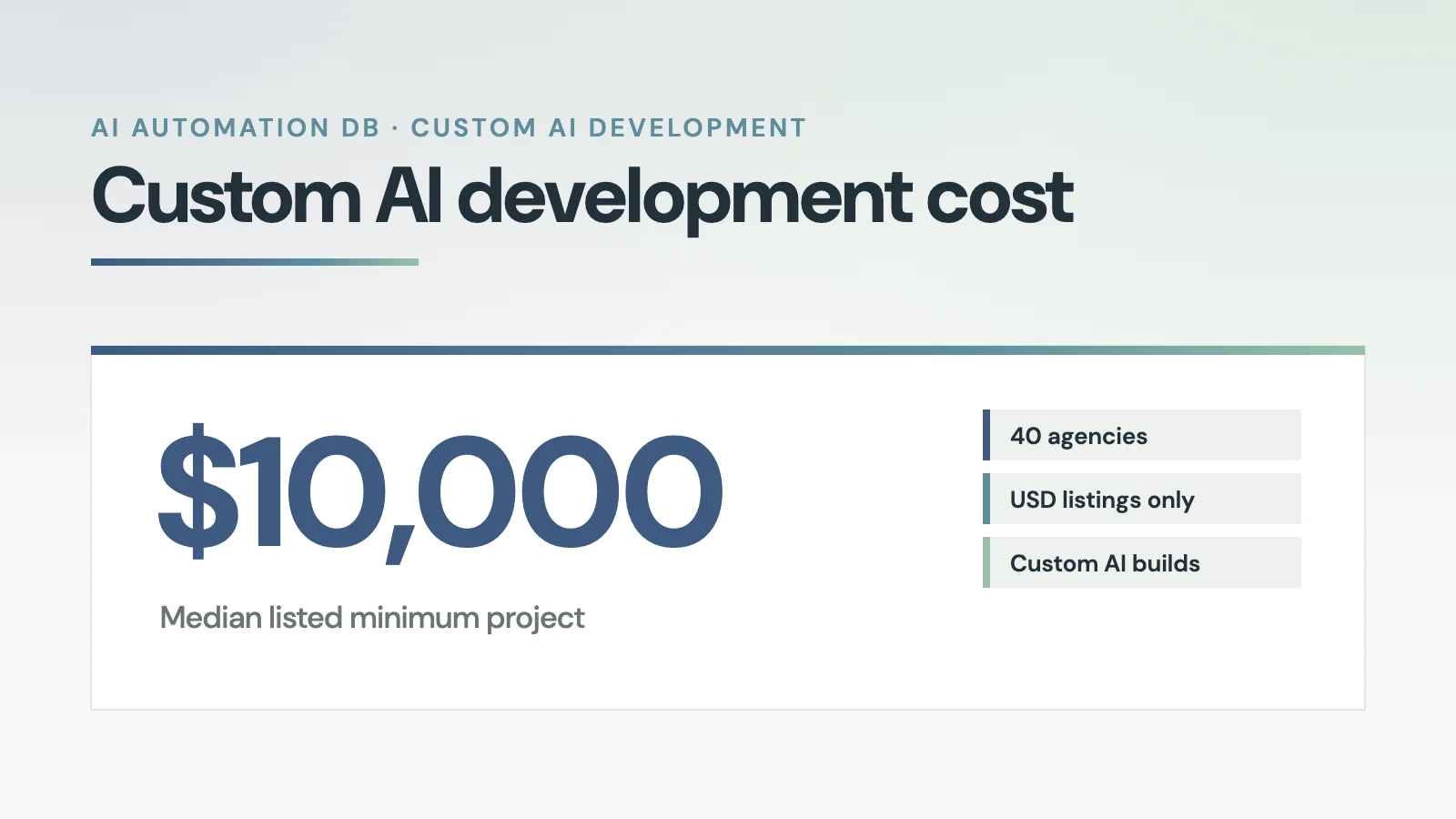
Build fees are only part of the cost. Add the platform licence and model usage. The guide chapter on AI automation pricing covers the full structure. For custom builds beyond platforms, see custom AI development cost.
How an engagement runs
AI workflow automation consulting follows a similar order across the agencies above. Workflow automation consulting often starts with a paid audit.
- Audit. The agency maps the process and ranks bottlenecks. Automation Consulting Services delivers a written scope from its discovery audit.
- Scope. One workflow gets a fixed scope, owner and success metric.
- Build and test. The agency builds on a platform and tests against real inputs.
- Pilot with review. People approve outputs at first. Flowtivity keeps a person in the loop on its agents.
- Tune. The simple-workflow tier includes 30 days of post-launch tuning.
- Run. A monthly retainer covers monitoring, credential updates and small changes.
Timelines in the case studies run from three to five weeks for focused builds. Larger programmes run for months. Ask who owns the platform account and credentials at the end. Our guide on ownership and lock-in lists the terms to request.
Related guides: best AI automation agencies and n8n vs Make vs Zapier.
Frequently asked questions
What is AI workflow automation?
AI workflow automation connects your apps and adds AI steps to the flow. The AI reads, sorts or drafts. AI workflow automation services cover the audit, build and monitoring. Many include a human approval step. Browse providers in the workflow automation hub.
What does a workflow automation consultant do?
An AI workflow consultant maps your process and finds the bottleneck. They decide which steps need rules, AI or a person. Then they build or specify the workflow. Automation Consulting Services sells a discovery audit from $500. It delivers a written scope and ranked bottleneck list.
How much do workflow automation services cost?
Published fixed fees run from $5,000 to $15,000 for a simple workflow. Mid-complexity builds run $15,000 to $75,000. Retainers start near $2,000 per month. These are Automation Consulting Services prices as of November 2026. Most agencies do not publish prices.
Workflow automation vs AI workflow automation: what is the difference?
Standard workflow automation follows fixed rules on structured data. AI workflow automation adds steps that handle unstructured input, such as emails and PDFs. The AI classifies, extracts or writes. Rules still route the data. Many good workflows mix both, and some need no AI.
How long does workflow automation take?
Focused builds in these case studies went live in three to five weeks. Automation Consulting Services lists one to three months for a simple workflow. Multi-workflow systems take three to six months. Scope and the number of connected systems drive the timeline.
Do AI workflows need human review?
Add a person when a wrong output costs money or trust. Flowtivity's inbox agent never sends without approval. Low-risk steps, such as tagging a record, can run alone. Log every AI output either way. The placement test above helps you decide.
Which platforms do AI workflow agencies use?
Most use n8n, Zapier or Make. Of 535 workflow agencies, 228 list n8n, 160 list Zapier and 150 list Make. Larger builds use custom code with a model API. Platform choice changes billing. Ask which unit your quote assumes.
How to hire an AI workflow automation agency?
Ask for case studies with named clients and measured results. Check who owns the accounts and workflows. Ask how failures are logged. Compare written scopes from two or three agencies. Our guide on evaluating an agency lists the checks.
The bottom line
AI workflow automation services pair rules for routing with AI for messy input. Start with one workflow and keep a person on risky steps.
Agencies in this post

Automation Consulting Services
New York, United States
Engineering discipline. Applied to your operations.
Flowtivity
Gold Coast, Australia
Make room for better work.

OstraconAI
Helsinki, Finland
AI agency for marketing and sales teams
Insurgence
Melbourne, Australia
Accelerating intelligence. Making work matter.